
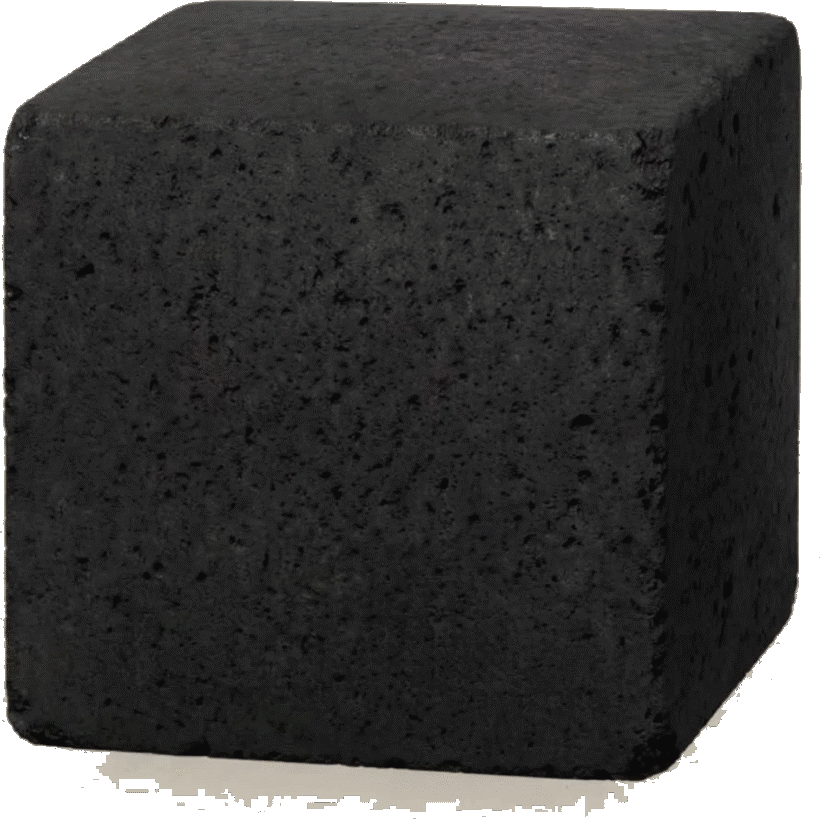
Cube
The common choice for shisha. Heat spreads evenly and the cubes sit flat on the head.
Available sizes centimetres
- 2.2 × 2.2 × 2.2
- 2.5 × 2.5 × 2.5
- 2.7 × 2.7 × 2.7
Custom sizes on request
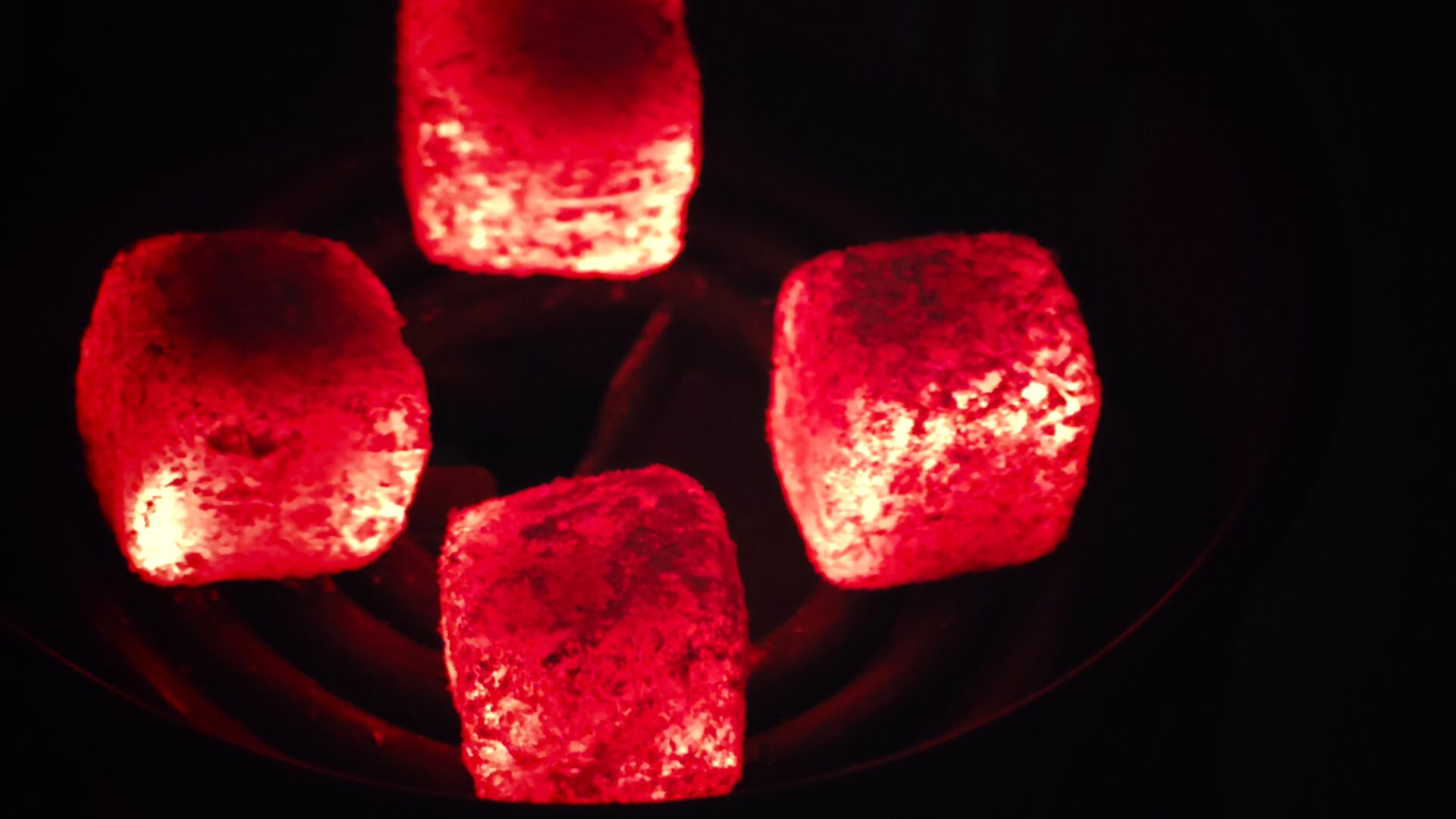
0°00′ · The Equator
Coconut shell charcoal briquettes from Sumatra and Sulawesi. Under 2.5% ash, a 60-90 minute burn, no smoke and no smell. Packed for export, loaded from Indonesian ports.
Burns for 60-90 minutes
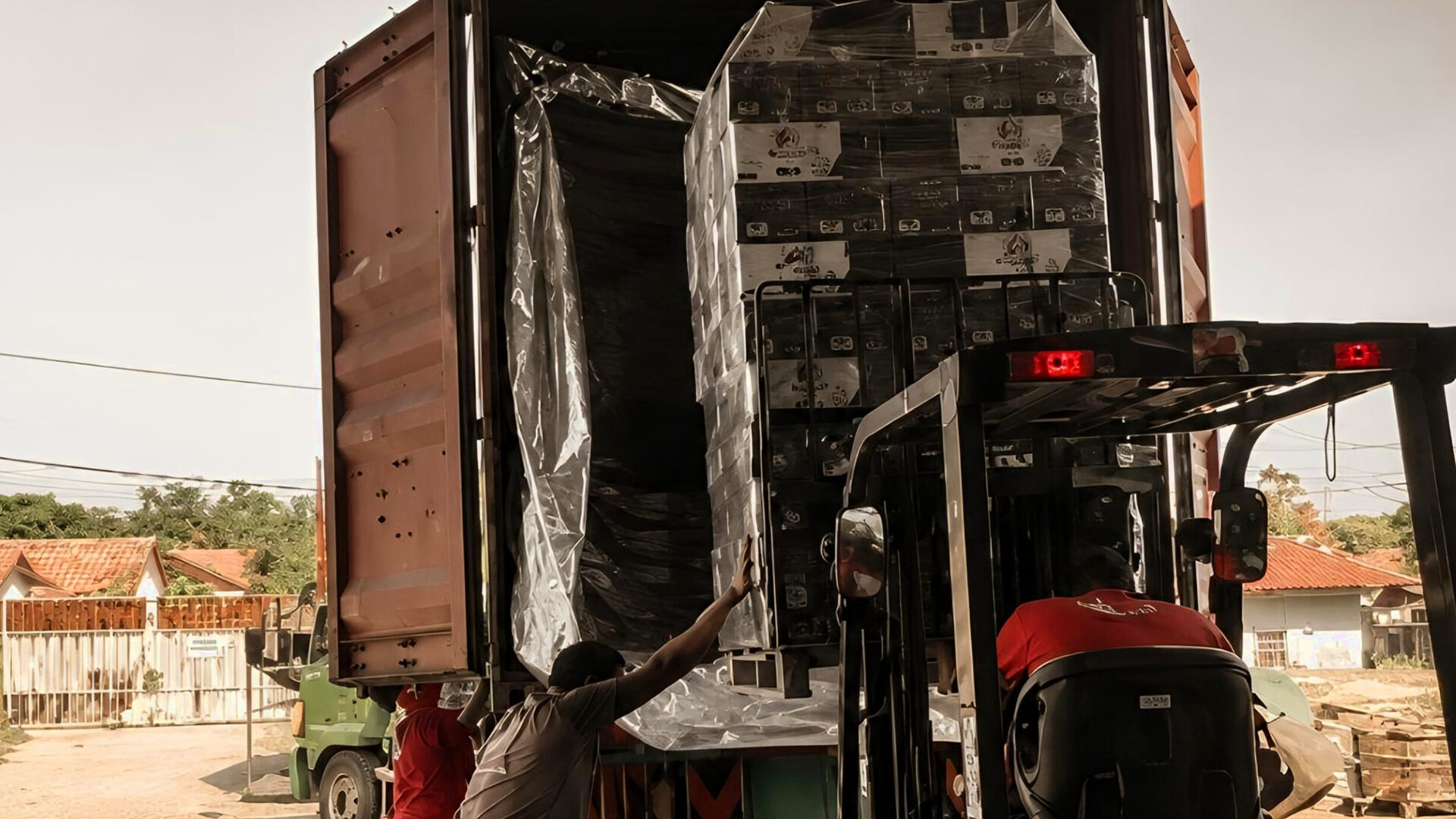
Export · 12+ Destinations
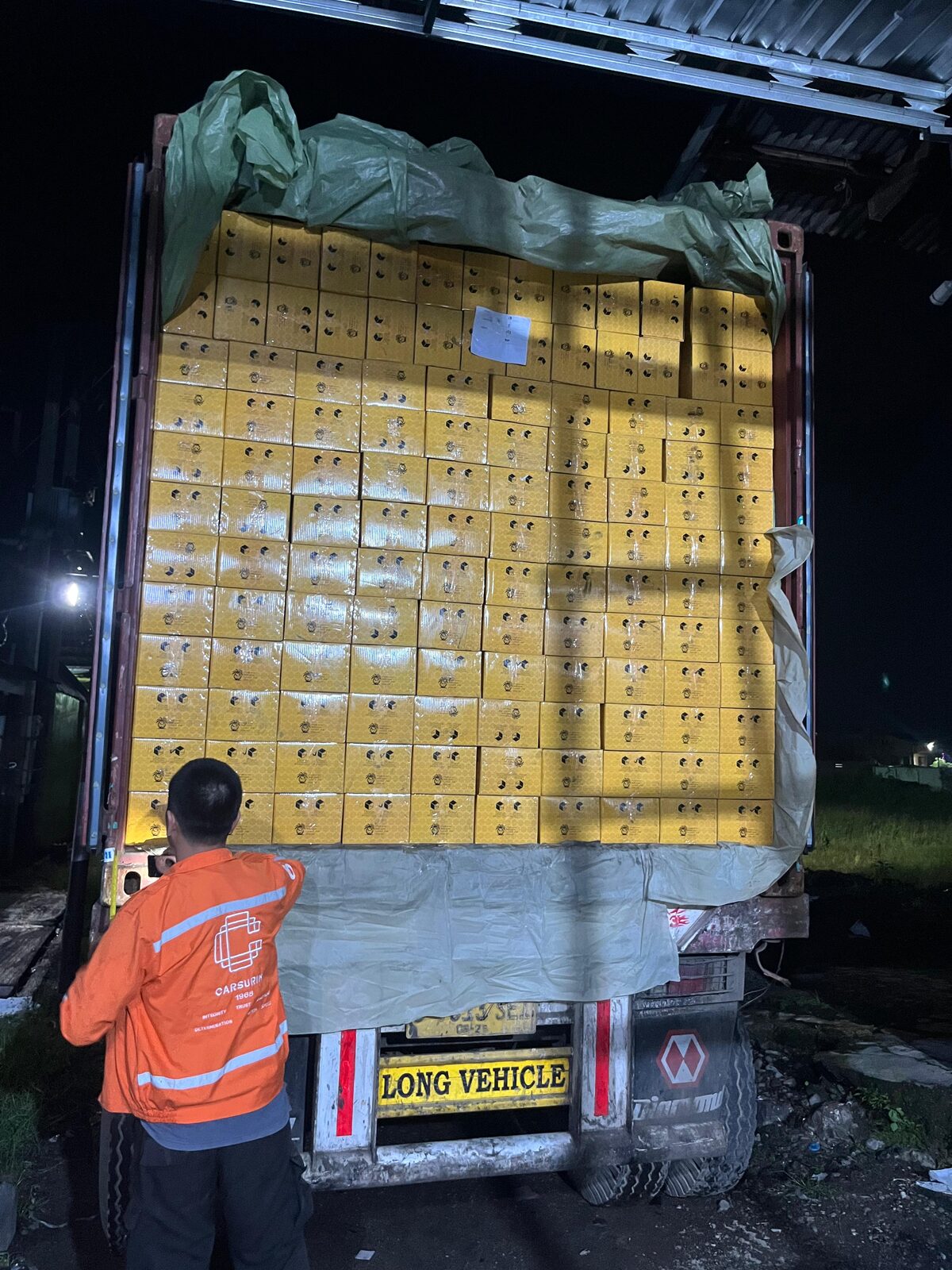
From Jebel Ali to Rotterdam. We load 18-28 tonnes per container, with export documents prepared for the destination country.
18-28 tonnes per container
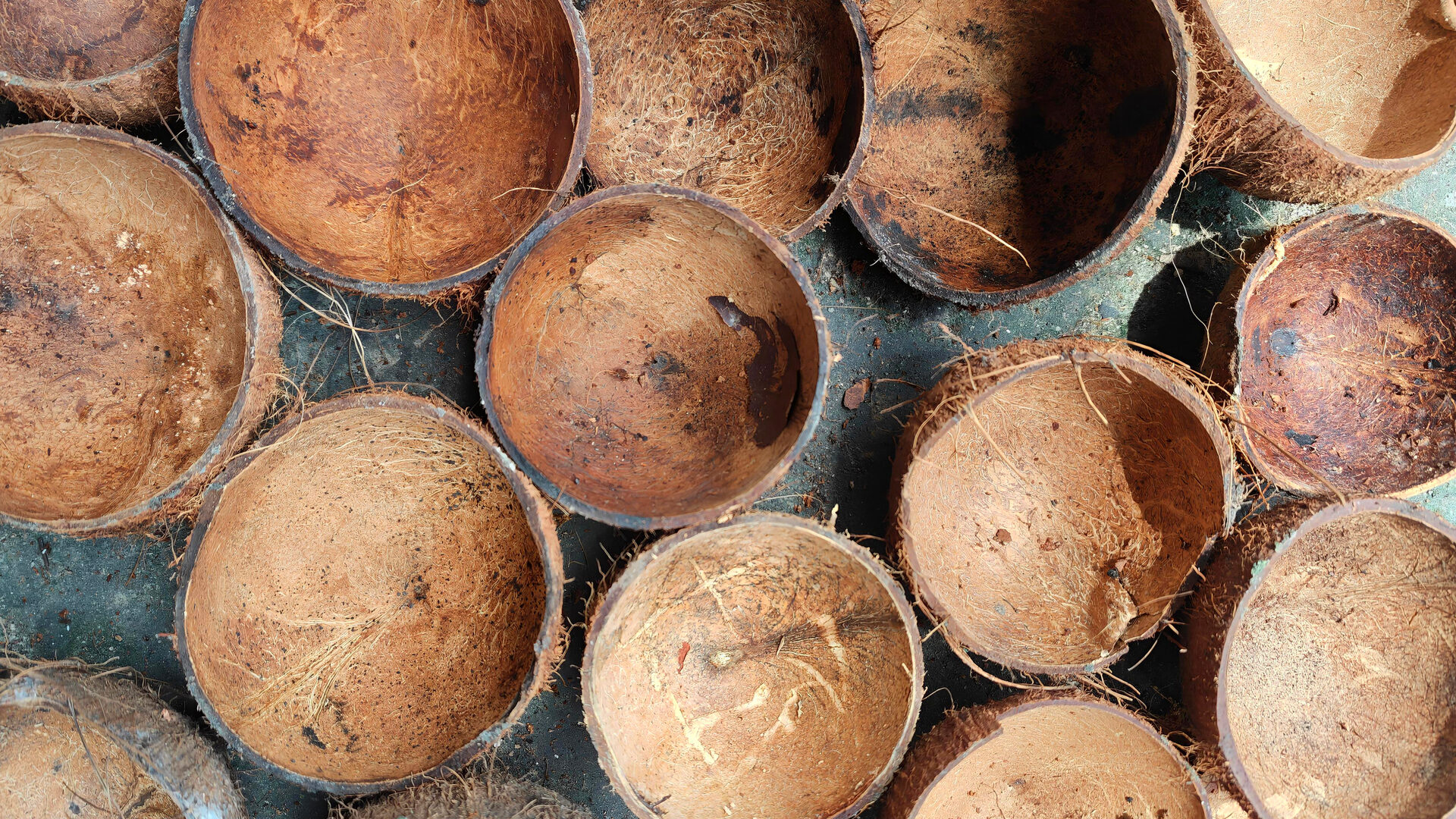
Raw material · 100% Coconut shell
We use mature coconut shell left over from the copra industry. Denser, higher in fixed carbon, and not a single tree is cut down.
Fixed carbon 75-80%
7500+kcal/kg
Calorific value
< 2.5%
Ash content
60-90minutes
Burning time
12+
Export markets
Catalogue
The shape decides how the briquette is used. The material specification stays the same across all of them.
The common choice for shisha. Heat spreads evenly and the cubes sit flat on the head.
Custom sizes on request
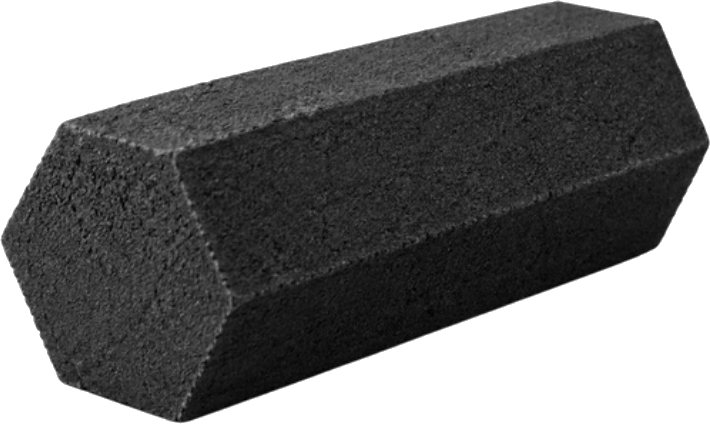
A six-sided bar. Flat faces keep it from rolling and let it pack tightly in the box.
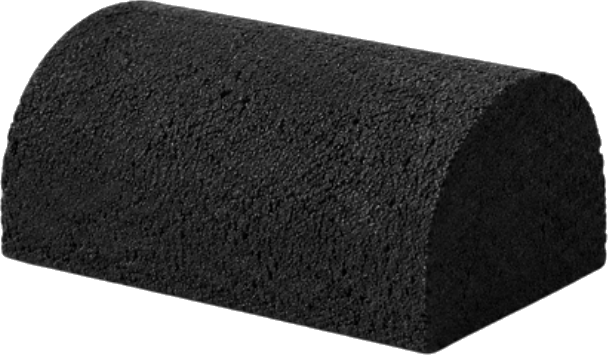
A curved back on a flat base. The top face catches light faster than a cube.
Custom sizes on request
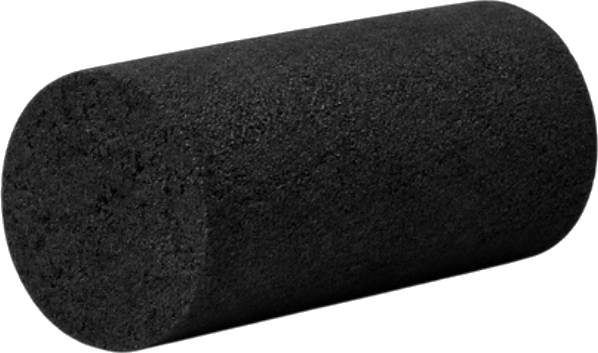
A round bar. Used for grilling and for stoves that need a long, steady burn.
Custom sizes on request
These figures apply to every briquette shape we produce.
Raw material
100%coconut shell
Fixed carbon
75-80%
Ash content
< 2.5%
Moisture
< 6%
Volatile matter
< 16%
Calorific value
7500-7800kcal/kg
Burning time
60-90minutes
Why Indonesian coconut
Indonesia sits directly on the equator and ranks among the largest coconut producers in the world. Both facts shape the shell we work with.
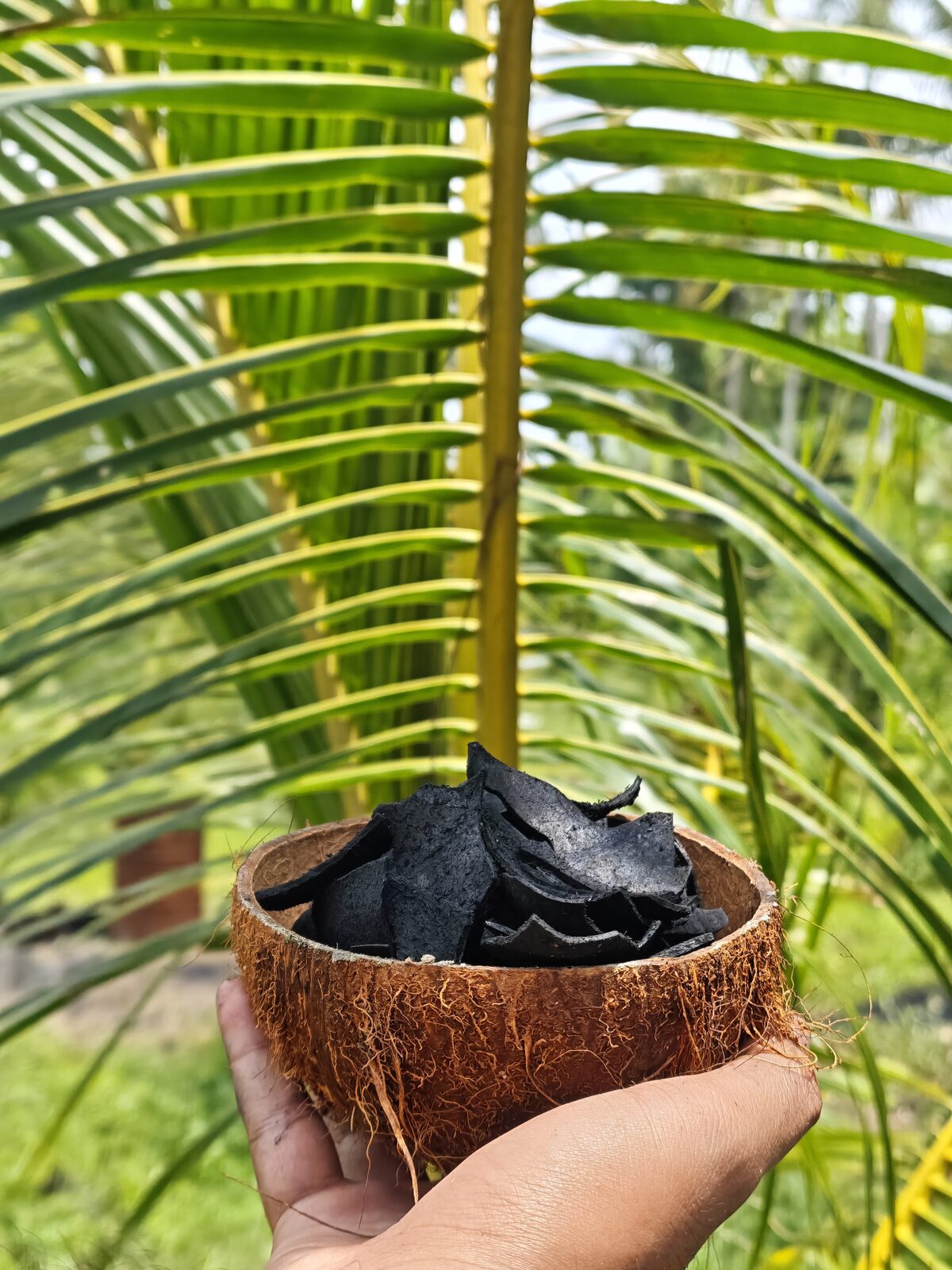
There is no single harvest season on the equator. Palms fruit continuously, so shell arrives without a gap and supply does not run dry in the middle of a contract.
We use shell from mature nuts already stripped of their meat for copra. Older shell is denser and harder, and that density is what pushes fixed carbon up and ash down.
The raw material is a by-product of the copra industry that used to be thrown away. No tree is cut down to make these briquettes.
Where it comes from
Sumatra and Sulawesi are both crossed by the zero degree line. Our shell comes from these two islands.
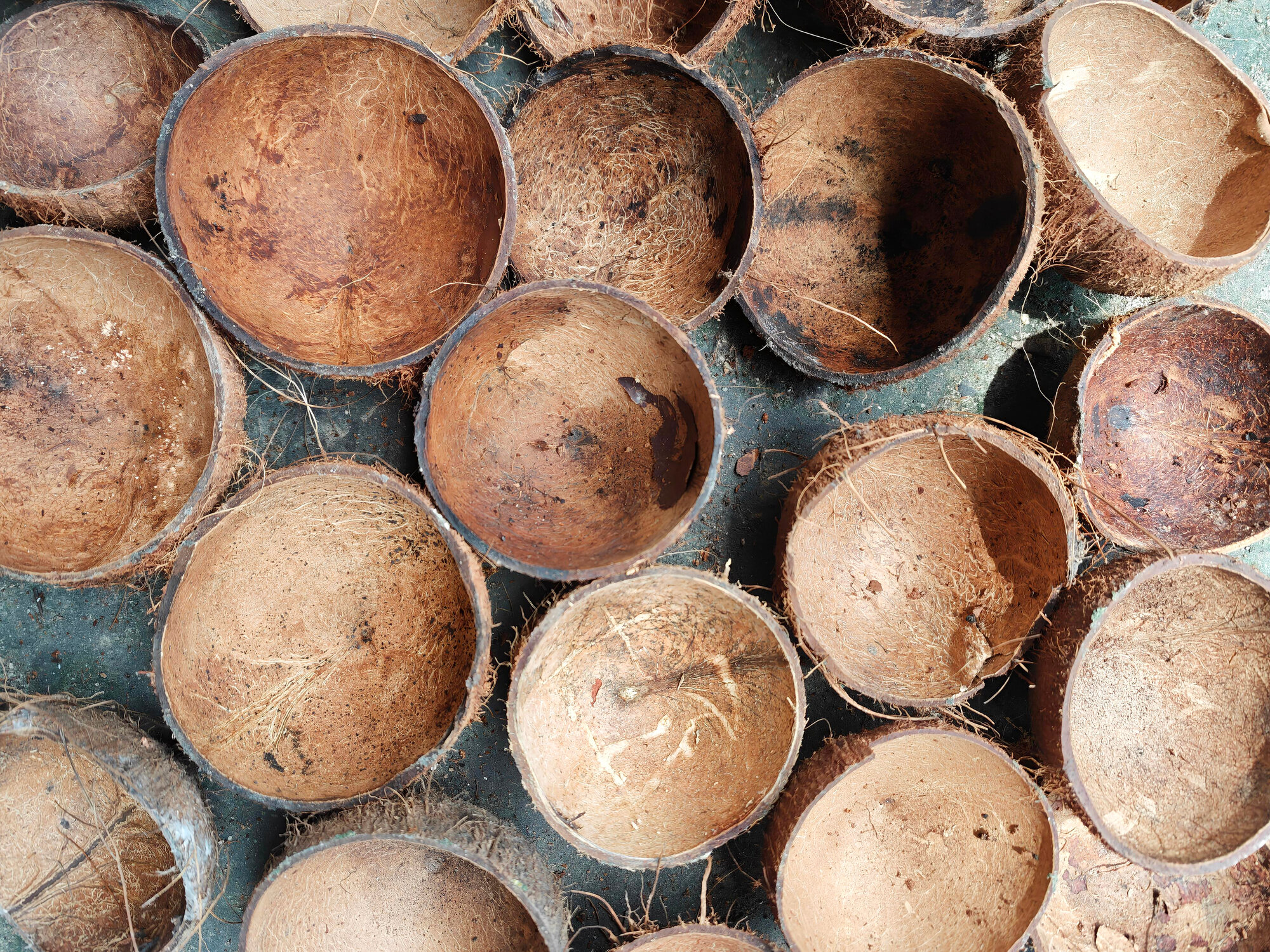
The story behind the charcoal
Coconut varieties and soil are much the same across Indonesia. What truly sets shell quality apart is not the coconut or the soil, but when the farmer harvests it, and that is driven by each region's market demand.
Western Indonesia
In Java, demand for coconut milk in homes and restaurants is very high, so many farmers pick coconuts before they are fully mature. Southern Sumatra acts as a buffer when Java runs short. Coconuts that do not pass market sorting are turned into copra, and because the flesh is still thin, so is the shell. The result: charcoal with low ash, but calorie that is not at its peak.
Eastern Indonesia
In Sulawesi and East Nusa Tenggara there are few large cities and little household demand for mature coconut. Instead, mature coconuts flow to the cooking-oil industry in Surabaya, Makassar and Bitung. Harvested fully mature, the shell is thick and dense. The result: charcoal with thicker ash, but higher calorie.
Why this matters to buyers
In short, farmer habits in each region decide the character of the shell charcoal. Most overseas buyers ask for ash content of at most 2.5%, and many ask for under 2%. In our experience, full-Sulawesi raw material struggles to go below 2% because the shell is genuinely thick and the calorie high. That is why we blend each region's character to match the climate and needs of the destination country.
European market
Cold-climate countries need high calorie and thicker ash for heating, as an alternative to gas. For shisha and heating, Europeans generally ask for larger sizes and high calorie, and are not too concerned about ash as long as the charcoal is natural.
Middle East market
Countries such as Lebanon, Saudi Arabia, Qatar, Kuwait, Oman and Yemen have a warm climate. Standard calorie (around 7000-7200) is enough, but what they look for is the visual: low ash and an attractive glowing ember when used in dim, air-conditioned rooms.
Our guarantee: whatever the need, every Mekha Energi briquette is made to the buyer's requirements, and 100% natural.
From shell to container
Every briquette goes through the same sequence. No stage gets skipped.
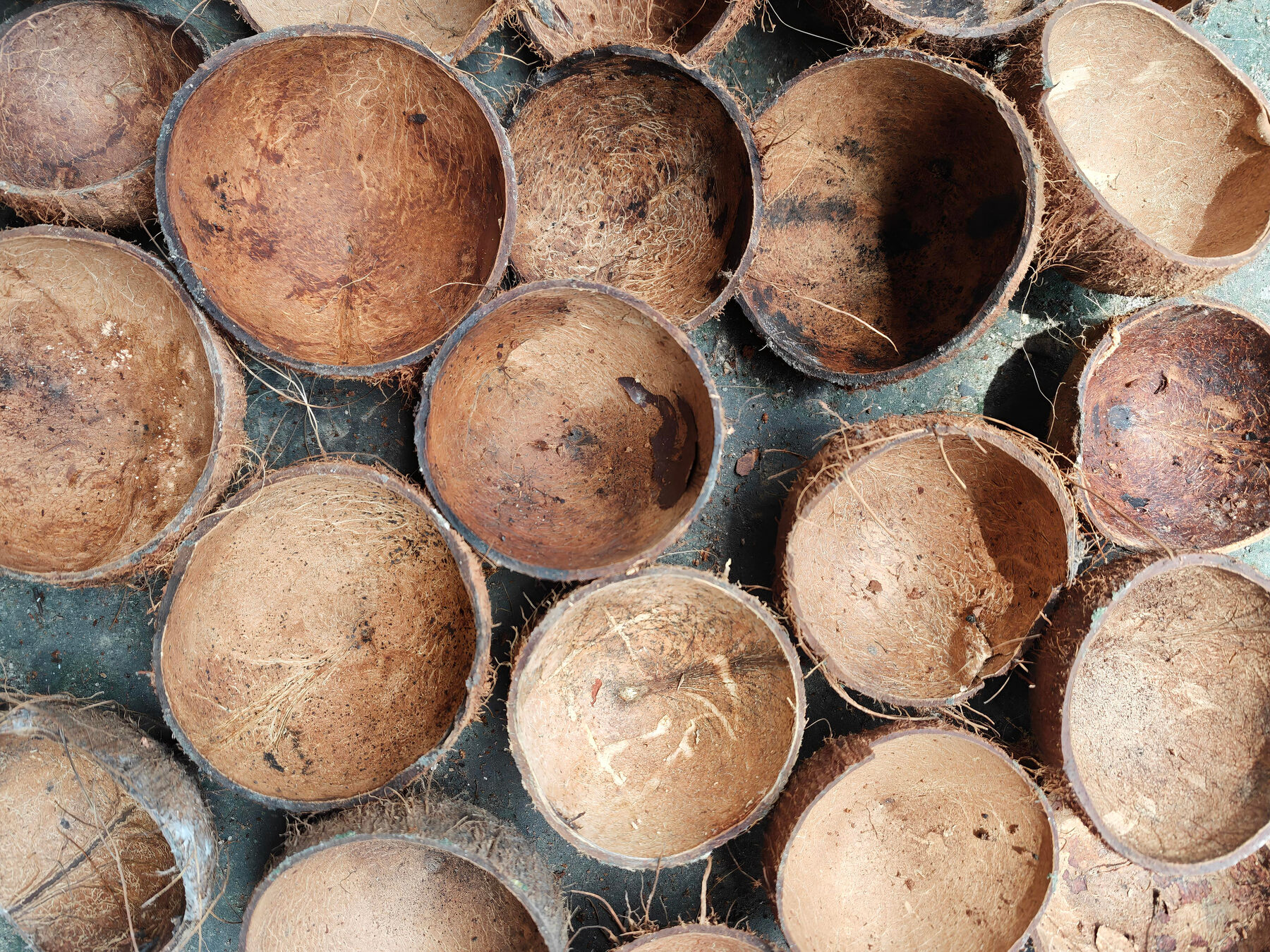
Mature coconut shell is gathered from copra centres across Sumatra and Sulawesi.
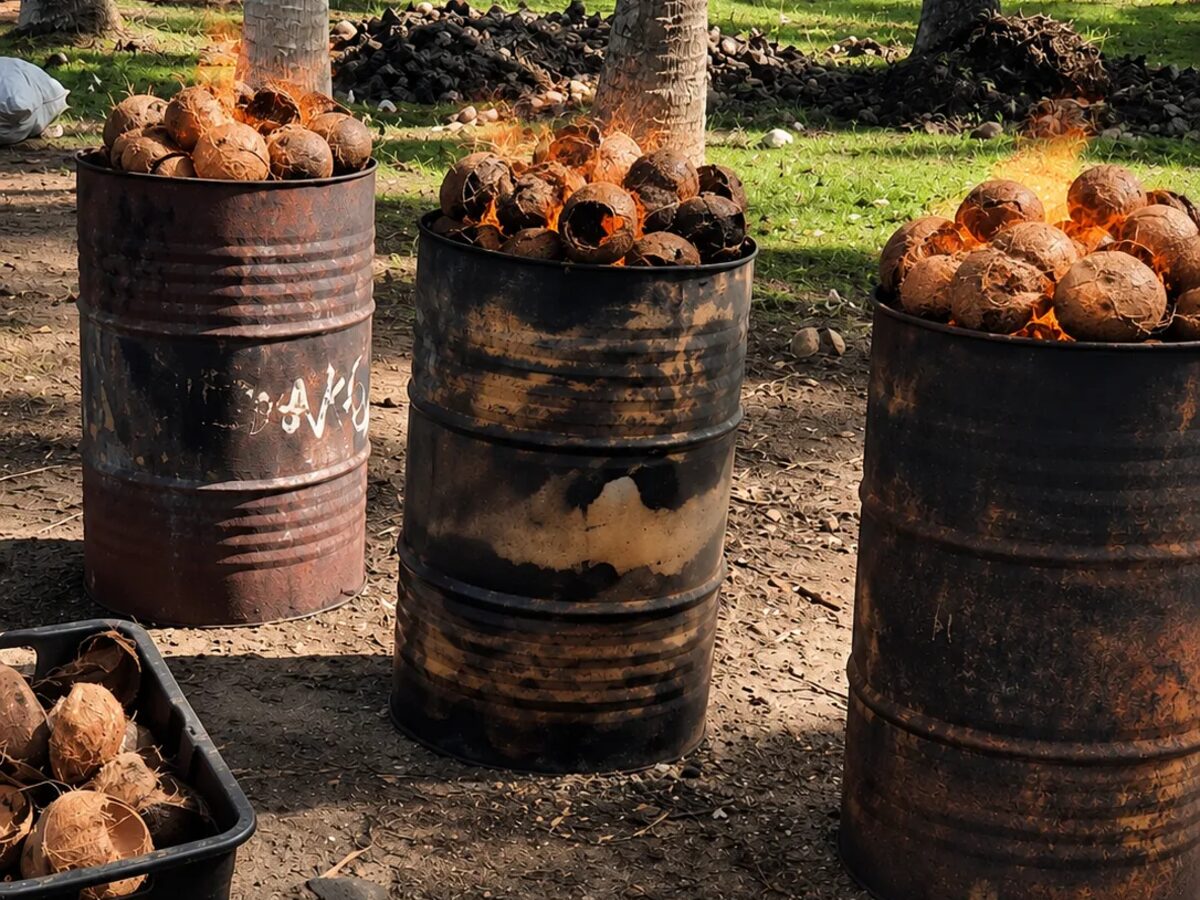
The shell is fired in closed kilns until it turns to charcoal rather than ash.
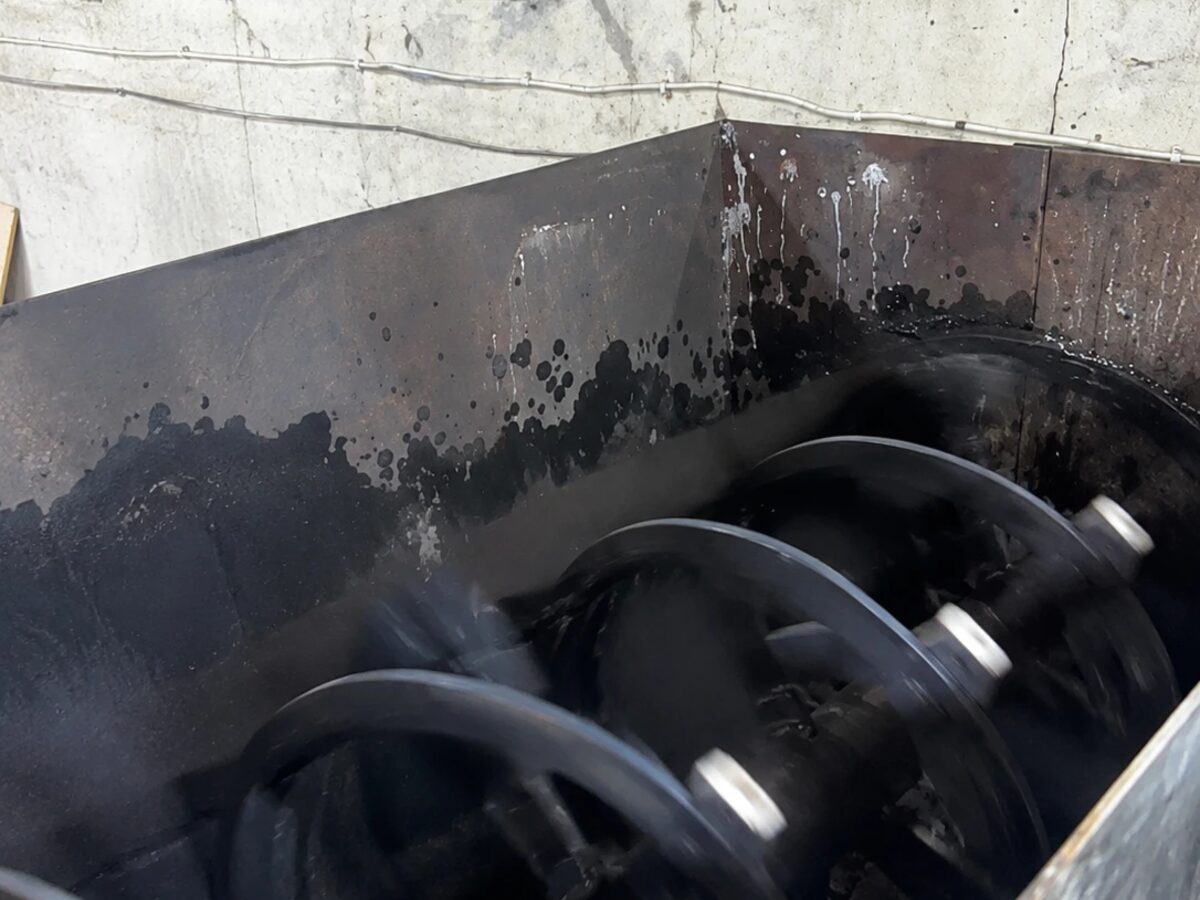
Charcoal is milled fine, then mixed with natural binder until the batch runs even.
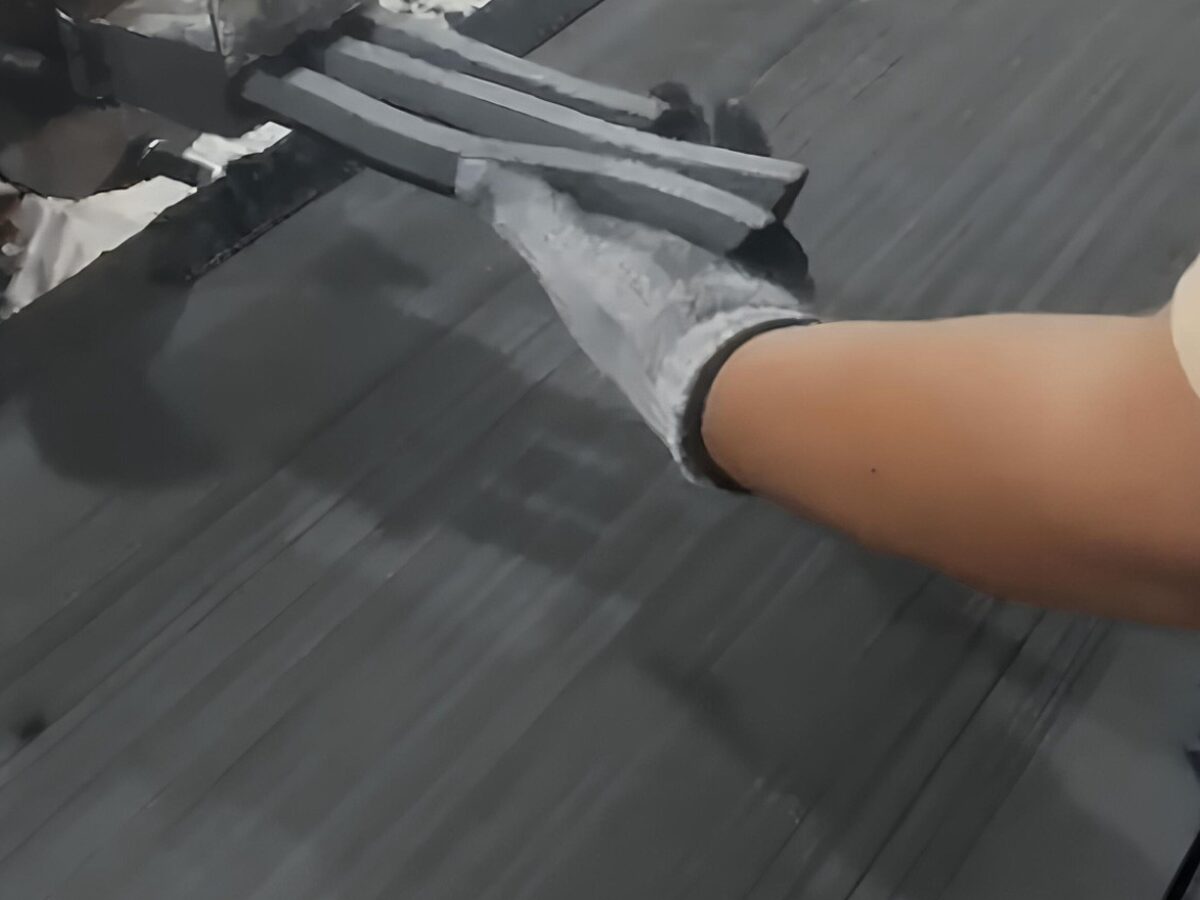
The mix is pressed into cubes, hexagonals, domes, or sticks as ordered.
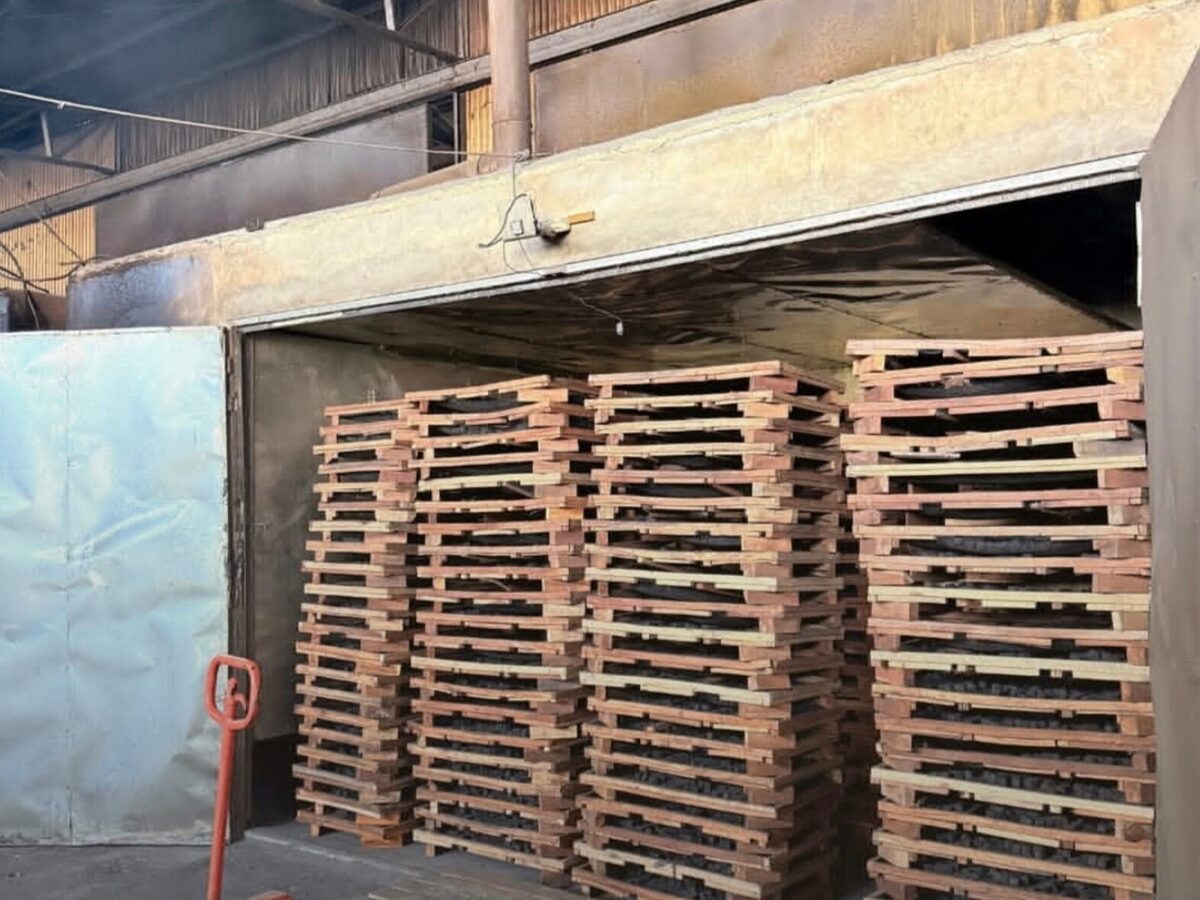
Briquettes are dried until moisture falls below 6%.
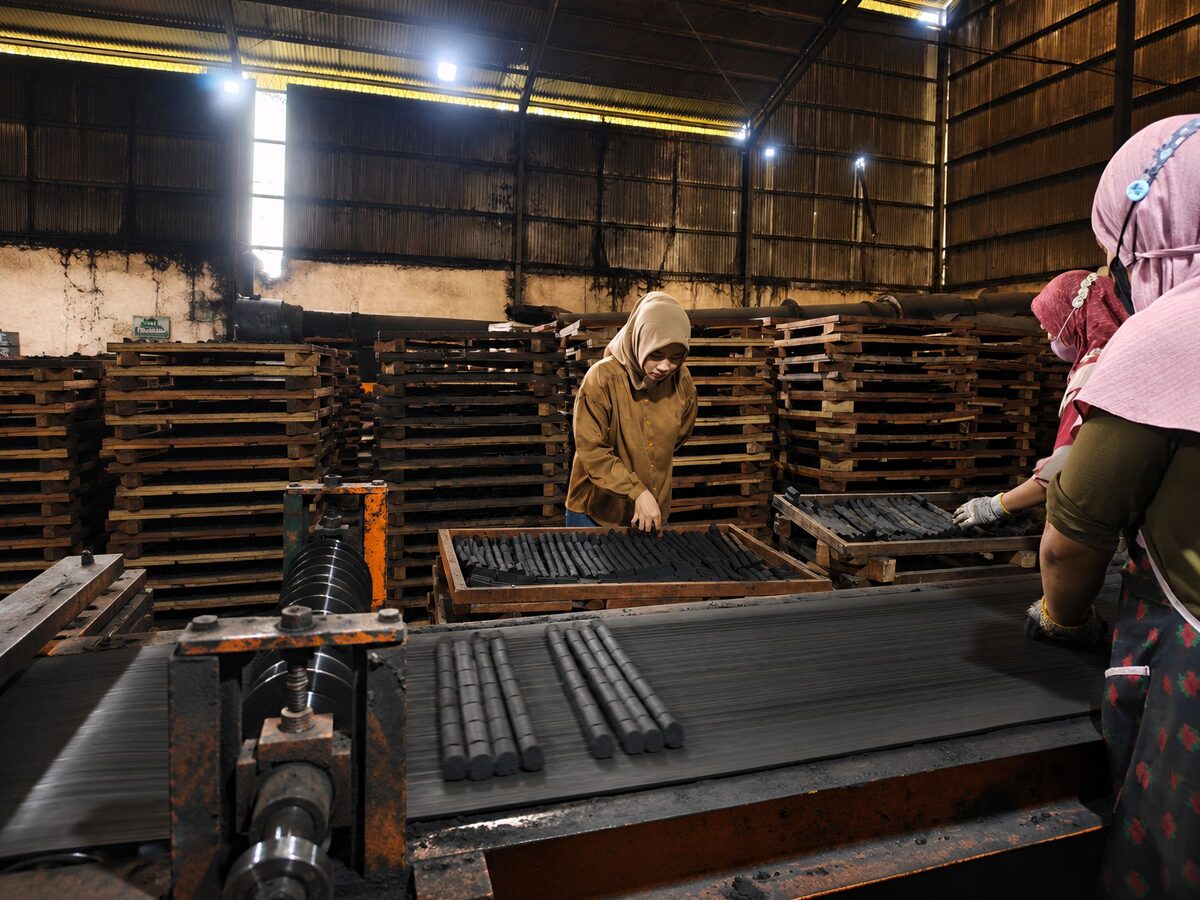
Every briquette is checked by hand. Cracked, chipped, or off-size pieces come out.
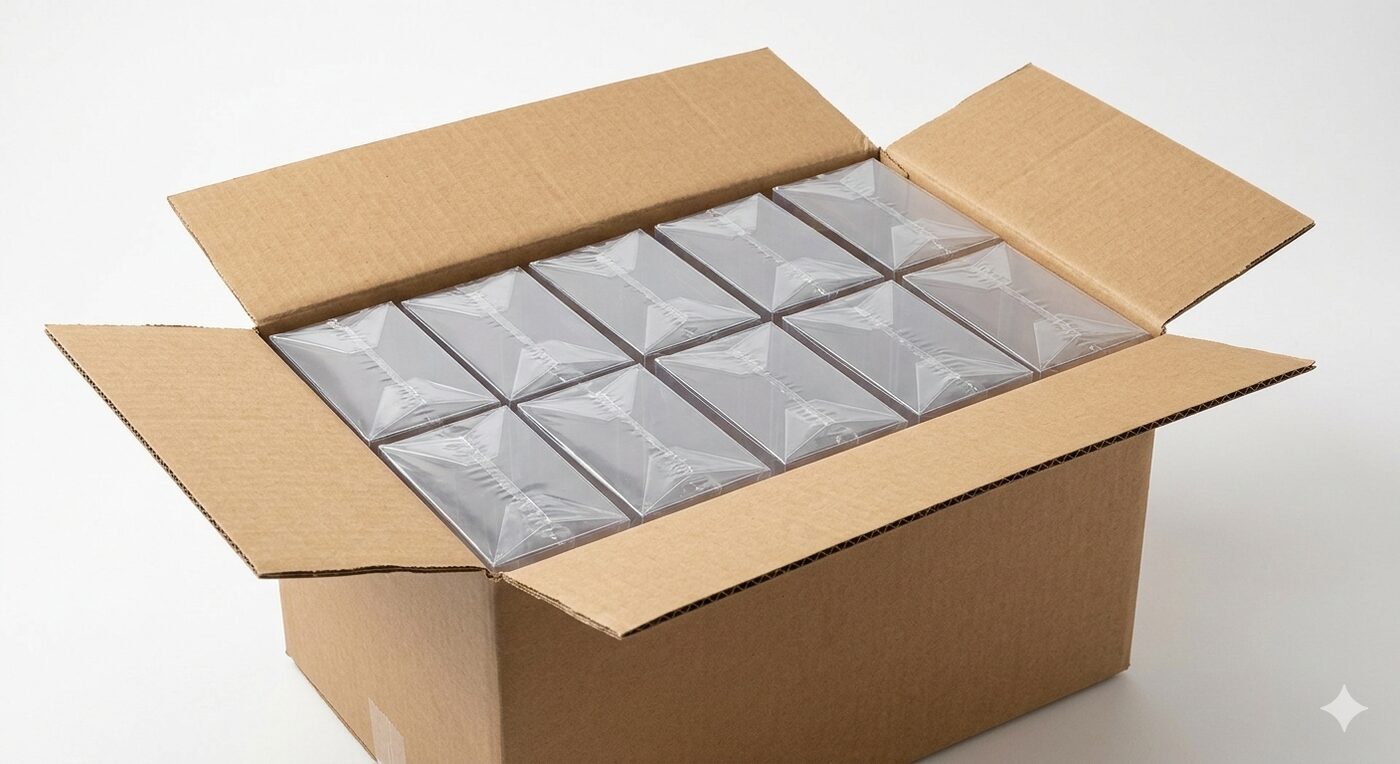
Into 1 kg inner boxes and then 10 kg master cartons, following the packaging option chosen.
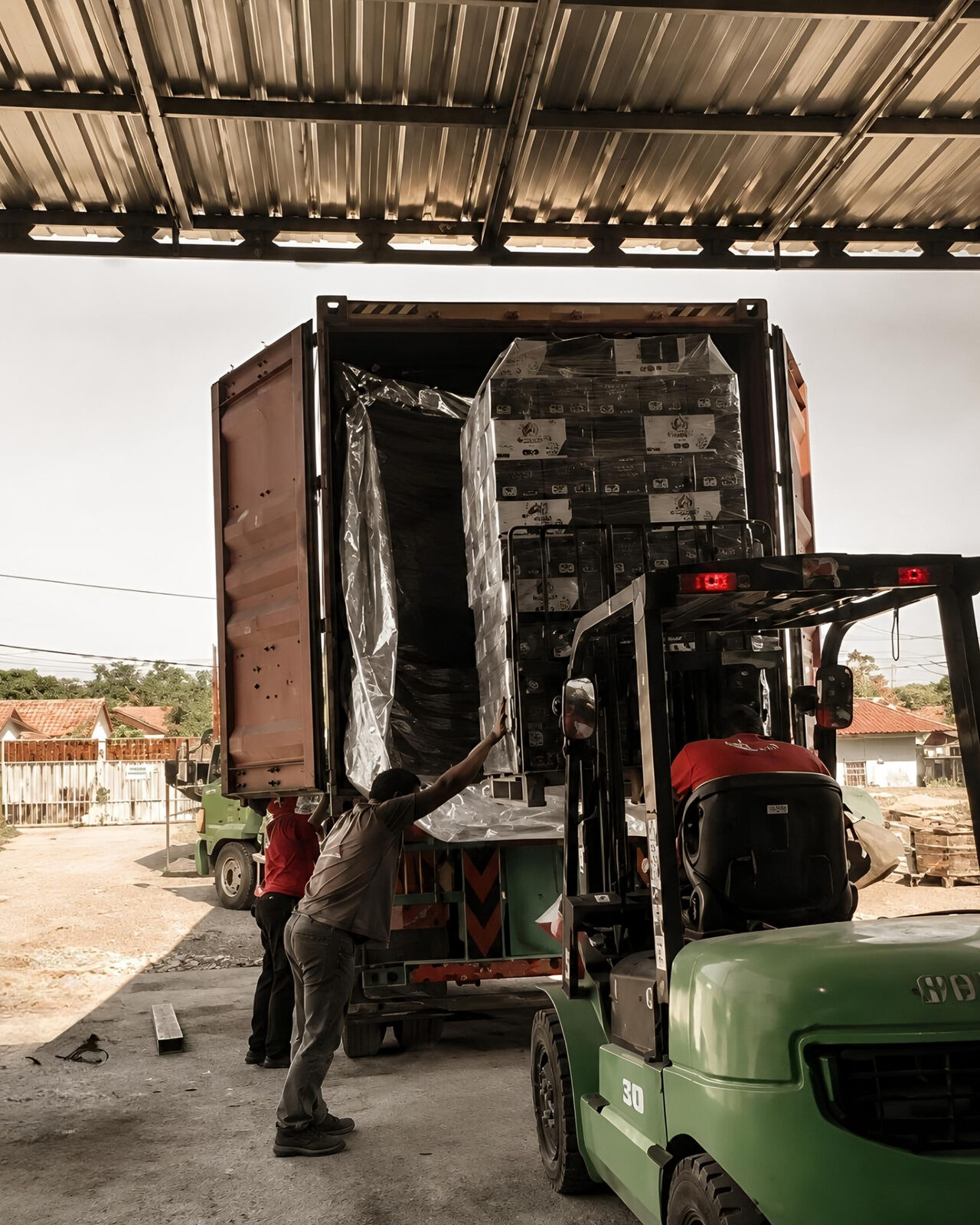
The container is loaded, sealed, and the export documents are prepared.
Packaging
Every option ships in 10 kg master cartons. What changes is the inner box and the print quality.
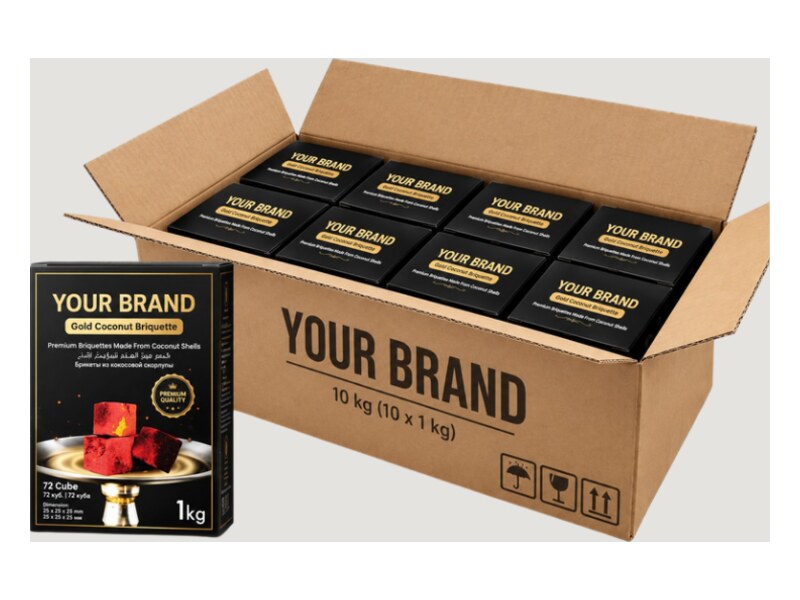
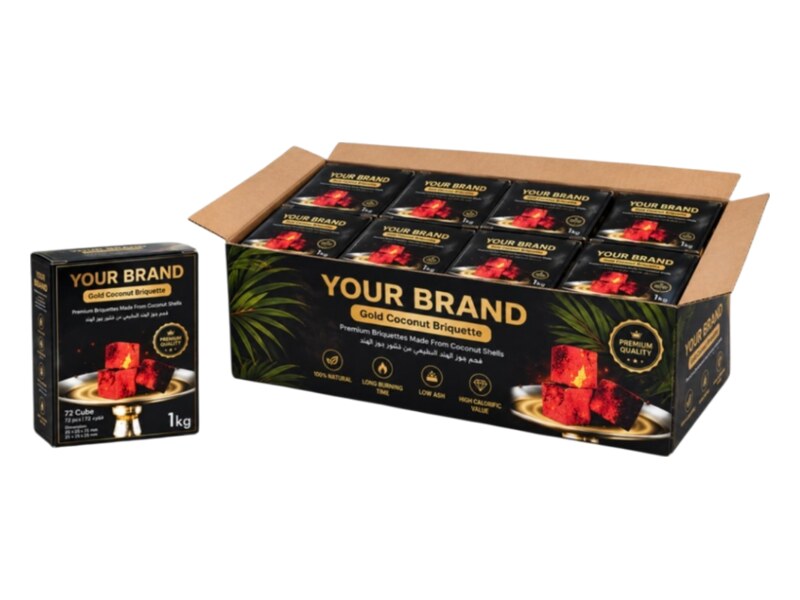
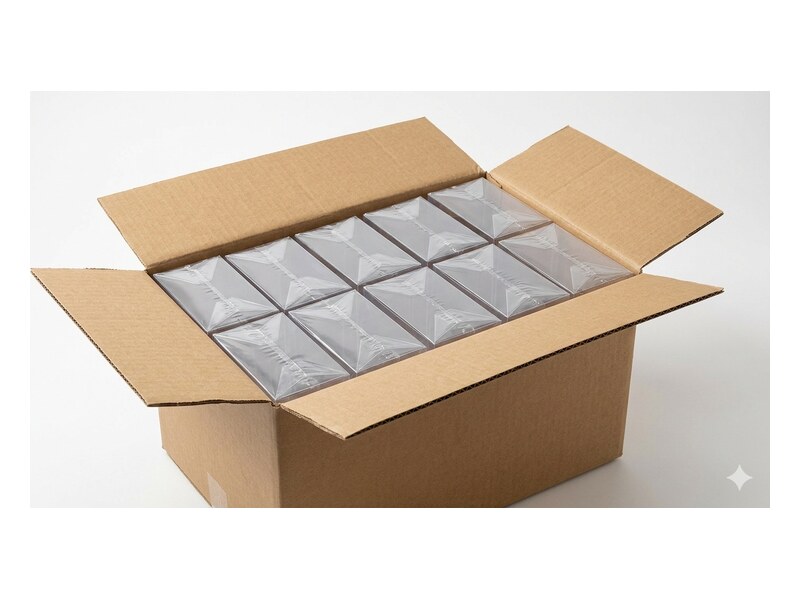
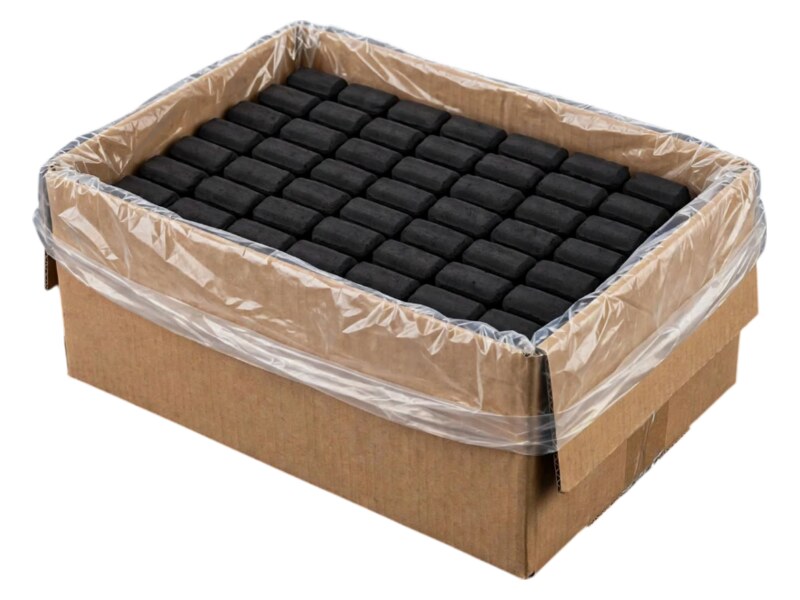
Packaging is costed separately from the briquette price. We put the figures in your quote.
Compliance & partners
Complete export permits, and shipping through world-class carriers.






Shipping
Pick a destination to see the estimated sailing time from Indonesia.
 United Arab Emirates
 Saudi Arabia
 Türkiye
 Egypt
Egypt
 Germany
 Netherlands
 United Kingdom
 United States
 South Korea
 Japan
Japan
 India
India
 Russia
Estimated sailing time
18-24 days
Destination port Jebel Ali
These are estimated container sailing times, not a guarantee. Actual transit depends on the vessel schedule and any transhipment, and we confirm it in your quote.
20'
18-20tonnes
40'
26-28tonnes
Estimated using 10 kg master cartons. The exact load depends on briquette shape and size.
| Destination country | Destination port | Estimated sailing time |
|---|---|---|
| United Arab Emirates | Jebel Ali | 18-24 days |
| Saudi Arabia | Jeddah | 20-26 days |
| Türkiye | Mersin | 25-32 days |
| Egypt | Alexandria | 24-30 days |
| Germany | Hamburg | 28-35 days |
| Netherlands | Rotterdam | 28-35 days |
| United Kingdom | Felixstowe | 28-36 days |
| United States | Los Angeles | 25-32 days |
| South Korea | Busan | 12-18 days |
| Japan | Tokyo | 14-20 days |
| India | Nhava Sheva | 12-18 days |
| Russia | Novorossiysk | 30-40 days |
Book a meeting
Tell us what you need below. We reply with a quote and a time that works for a call.
We reply within one working day.
Ready to export
Talk to us for the best quote and a free consultation about your export needs.
Book a meeting
Tell us what you need below. We reply with a quote and a time that works for a call.